Most Popular

Elon Musk Accused Of Bullying Republicans To Scrap US-China Investment Safeguards To Protect Tesla's Interests

Tesla Inc. TSLA CEO Elon Musk has been accused by Rosa DeLauro of pressuring Republicans to abandon key U.S.-China investment restrictions to safeguard the EV giant’s business interests in China.

What Happened: In a letter on Friday, DeLauro, the top Democrat on the House Appropriations Committee, stated that Musk used his influence to have Republicans scrap provisions aimed at regulating U.S. investments in China, reported Reuters.

She pointed to Musk’s “extensive investments in China in key sectors” and alleged ties to Chinese Communist Party or CCP leadership.

The controversy centers on Tesla’s Shanghai gigafactory, which produces about 50% of Tesla’s global automobile output.

See Also: Tesla Cybertruck Units Reportedly Found With Cell Dent Issues: EV Giant Starts Replacing Battery Packs

DeLauro argued that Musk’s actions jeopardized critical legislation to safeguard U.S. supply chains and national security, accusing him of ” bullying Republicans into going back on their words.”

Musk, in turn, criticized DeLauro on X, formerly Twitter, calling for her expulsion from Congress.

Why It Matters: Tesla has seen robust sales in China, bolstered by strong demand for its Model Y and Model 3 vehicles. In November, Tesla’s retail sales in China reached 73,490 units, showing a significant recovery from earlier challenges in 2024.

The EV giant also faces stiff competition from local players like BYD Co., which leads the market, but Tesla’s steady increase in weekly insurance registrations—21,900 units in early December—signals growing momentum.

Tesla reported third-quarter revenue of $25.18 billion marking an 8% year-over-year growth. While the company missed Wall Street estimates, automotive revenue reached $20 billion, up 2% year-over-year.

See also  <!DOCTYPE html><html lang="en"><head> <meta charset="UTF-8"> <meta http-equiv="X-UA-Compatible" content="IE=edge"> <meta name="viewport" content="width=device-width, initial-scale=1.0"> <title>Ford Motor Company vs. Toyota: Battle of the Hybrid EV Stocks</title></head><body><h2>The Hybrid EV Market Landscape</h2><p>The high prices of electric vehicles (EVs) and concerns over charging infrastructure have led consumers to shift towards hybrids, a blend of gasoline and electric power. This trend has seen a significant surge in hybrid sales, including plug-ins, with a remarkable 65% increase in sales, outpacing the growth of pure electric vehicles. </p><p>Americans' adoption of hybrids is on the rise, with hybrids representing about 10% of all new car purchases in the U.S., surpassing the market share of pure electric vehicles.</p><p>Furthermore, as the Biden administration refines auto emissions standards to reduce the carbon footprint of passenger vehicles, manufacturers of plug-in hybrids and conventional gas-electric hybrids are poised to benefit from these regulations.</p><h2>Ford Motor Company: A Deeper Dive</h2><p>One of the key players in the hybrid EV market is Michigan-based Ford Motor Company (F), a company with a long history dating back to 1903. Ford specializes in a range of vehicles from trucks to luxury cars, currently boasting a market cap of $51.89 billion.</p><p>While Ford's stock saw a modest 14.5% increase over the past year, it has underperformed compared to the S&P 500 index. Despite being a long-term underperformer with a 10-year decline of nearly 15%, Ford reinstated its quarterly dividend in 2021, offering a dividend yield of 4.6%.</p><h3>Ford's Financial Performance</h3><p>Ford's financials have been a mixed bag, with the company reporting an EBIT loss of $4.7 billion in its electric vehicle segment in the past year. The company faced challenges like high labor costs due to strikes, leading to a total loss of $526 million in the fourth quarter of the fiscal year.</p><p>Despite these setbacks, Ford managed to beat earnings expectations, reporting adjusted earnings per share of $0.29 in the last quarter. The company's revenue of $43.21 billion also exceeded Wall Street estimates, indicating resilience in the face of operational challenges.</p><h2>Toyota Motor Corporation: A Rival in the Race</h2><p>On the other side of the spectrum is Toyota Motor Corporation (TM), a formidable contender in the hybrid EV market. Toyota has established itself as a pioneer in hybrid technology with popular models like the Prius, commanding a significant market share globally.</p><p>While Toyota faces stiff competition from other automakers, the company's strong brand reputation and commitment to innovation position it as a strong player in the evolving landscape of hybrid EVs.</p><h3>Comparing Ford and Toyota</h3><p>Investors seeking exposure to the hybrid EV market must weigh the pros and cons of investing in Ford versus Toyota. While Ford offers a compelling dividend yield and attractive valuation metrics, Toyota's established presence and technological advancements make it a formidable competitor in the long run.</p></body></html><html><head><title>Toyota vs Ford: Battle of the Hybrids</title></head><body>The Rise of Hybrid Dominance: A Tale of Two Automakers

DeLauro’s accusations highlight broader concerns about the risks of U.S. investments in Chinese technology sectors. October rules finalized by the Treasury Department aim to limit such investments in critical areas like artificial intelligence to protect national security.

However, the removal of provisions for outbound investment screening could leave gaps in safeguarding U.S. interests.

Price Action: Tesla’s stock declined by 3.46% on Friday, ending the session at $421.06. Despite this drop, the company’s shares have surged 69.5% since the start of the year, significantly outpacing the Nasdaq 100 index, which has gained 28.68% over the same period, according to data from Benzinga Pro.

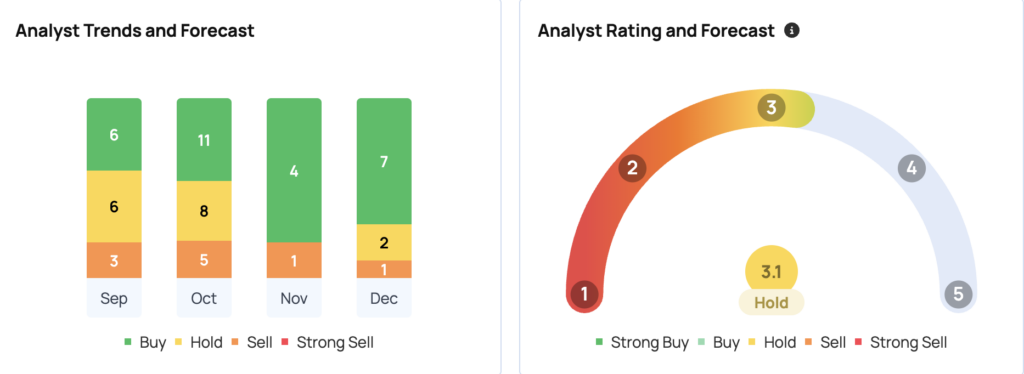
The latest ratings from Baird, Mizuho, and Goldman Sachs have established an average price target of $446.67, suggesting an upside potential of 5.53%.

Read Next:

Disclaimer: This content was partially produced with the help of Benzinga Neuro and was reviewed and published by Benzinga editors.

Photo courtesy: Shutterstock

Market News and Data brought to you by Benzinga APIs

5 Stocks Our Experts Predict Could Double In the Next Year

By submitting your email, you'll also get a free pivot & flow membership. A free daily market overview. You can unsubscribe at any time.