
Most Popular

Wedbush Hikes Target Price On Sam Altman-Backed Oklo To $45 On Hopes Of AI Raising Power Demand

Wedbush Securities on Friday raised its price target on energy company Oklo Inc. OKLO to $45 from $26 while maintaining an “outperform” rating citing increased confidence in the AI revolution data center buildout increasing under the new Trump Administration.

What Happened: Oklo, backed by OpenAI CEO Sam Altman, is developing nuclear fission power plants to provide energy at scale. Wedbush said in a note on Friday that it believes nuclear energy will ultimately play a key role in powering data centers, given Project Stargate is merely the start of a larger AI initiative.

Given Altman’s key AI role, Oklo too, will be a major player, Wedbush said.

According to Wedbush, the “AI revolution” is driving demand for clean energy to power AI initiatives with the need for computing power only expected to grow. Oklo, it says, is in a great position to capitalize on the elevated demand.

Further, the company’s business model involves selling its power directly to customers and not the reactors under long-term contracts, enabling it to make long-term recurring revenues, it said.

Why It Matters: Oklo, however, is yet to make a revenue and reported a net loss of over $63 million for the nine months through the end of September.

Oklo shares closed up 7.8% at $41.82 on Friday. The stock is up 91.4% year-to-date, according to data from Benzinga Pro.

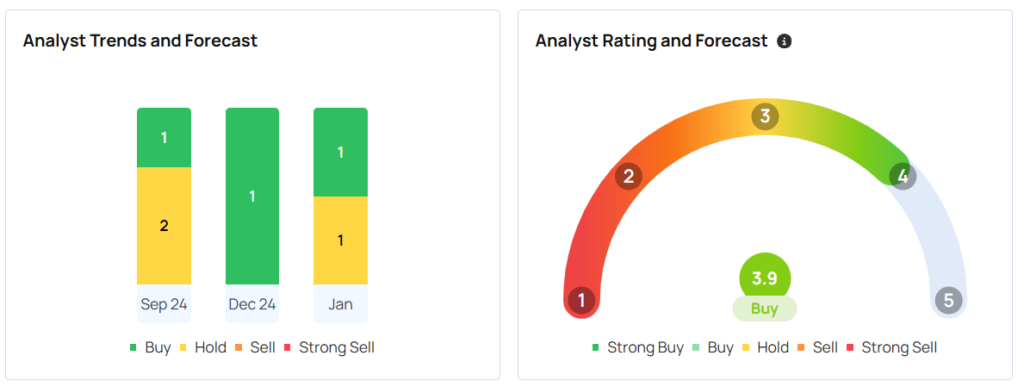
Oklo has a consensus price target of $28.67 based on the ratings of 4 analysts tracked by Benzinga and a consensus “buy” rating.

Earlier this month, Citigroup increased the stock’s target price to $31 from $10, while maintaining a “neutral” rating.
See also  <!DOCTYPE html><html lang="en"><head> <meta charset="UTF-8"> <meta name="viewport" content="width=device-width, initial-scale=1.0"> <title>Ford Stock Performance Analysis</title></head><body><h2>Understanding Ford's Recent Stock Decline</h2><div> <p style="text-align: justify;">Ford (F) has recently experienced a sharp decline in its stock price, plunging nearly 23% over the past month following disappointing second-quarter results. The automaker's earnings per share fell short of expectations, leading to a more than 5% decrease in net income to $1.8 billion compared to the previous year.</p> <p style="text-align: justify;">One of the primary factors contributing to this decline was a substantial increase in warranty and vehicle recall expenses, amounting to $2.3 billion in the second quarter alone. Investor confidence was further shaken by Ford's conservative profit outlook compared to its competitor General Motors (GM), which reported better-than-expected earnings and raised its full-year guidance.</p></div><h2>Exploring Ford's Strategic Initiatives</h2><div> <p style="text-align: justify;">Amidst these challenges, Ford's commercial vehicle division, Ford Pro, emerged as a beacon of strength during the second quarter. With an impressive operating margin of 15.1%, Ford Pro showcased robust performance driven by high demand for Super Duty trucks and Transit commercial vans.</p> <p style="text-align: justify;">Ford's focus on software technology and services through Ford Pro is expected to drive future growth, with CEO Jim Farley emphasizing the importance of software control across all vehicle domains. The company's strategic initiatives include substantial investments in software subscriptions and integrated service revenues, positioning Ford Pro as a significant contributor to Ford's EBIT by 2026.</p></div><h2>Challenges in the Electric Vehicle Segment</h2><div> <p style="text-align: justify;">While Ford Pro excelled, the electric vehicle (EV) division, Ford Model e, presented significant challenges. Incurring a loss of $1.1 billion in the second quarter, Ford Model e struggled due to lower sales volumes, pricing pressure, and high manufacturing costs. This underperformance has led to downward revisions in earnings estimates, reflecting concerns about Ford's near-term prospects.</p></div><h2>Ford's Financial and Operational Outlook</h2><div> <p style="text-align: justify;">Despite the hurdles in the EV segment, Ford's robust performance in Ford Pro is expected to offset some losses. The company is also prioritizing quality improvements in newer models to address warranty issues. Financially, Ford ended the second quarter with increased liquidity and raised cash flow projections for the year, signaling financial stability amidst operational challenges.</p> <p style="text-align: justify;">While Ford's valuation remains attractive and its Ford Pro division shows promise, internal challenges such as high warranty costs and EV segment struggles persist. As Ford navigates these obstacles, investors may need to exercise caution and monitor the company's progress in overcoming operational setbacks.</p></div><h2>Final Assessment of Ford's Stock</h2><div> <p style="text-align: justify;">In conclusion, Ford's recent stock decline presents a mixed outlook for investors. While the company's valuation is appealing and strategic initiatives in Ford Pro are promising, internal challenges pose significant risks. Existing shareholders may consider holding on to their shares, while new investors may benefit from adopting a cautious approach until Ford demonstrates substantial progress in addressing operational and financial hurdles.</p></div></body></html><!DOCTYPE html><html lang="en"><head> <meta charset="UTF-8"> <meta http-equiv="X-UA-Compatible" content="IE=edge"> <meta name="viewport" content="width=device-width, initial-scale=1.0"> <title>Ford Motor Company Navigates Market Challenges</title></head><body> <article> Analyzing Ford Motor Company's Resilience Amid Market Turbulence

Read Next:

Photo courtesy: Oklo

Market News and Data brought to you by Benzinga APIs

5 Stocks Our Experts Predict Could Double In the Next Year

By submitting your email, you'll also get a free pivot & flow membership. A free daily market overview. You can unsubscribe at any time.